

Design notes: choosing pathways
A designer's guide to choosing the right path

Garden pathways may seem like a small or boring decision, but tell me, how do you feel about hardwood floors vs. carpet? What about linoleum vs. marble? My nine-year-old son loves a “Who Would Win” book, which this is quite similar to. Add in a choose-your-own-adventure title, and we’re on our way. Pathways take a space from drab and DIY to kept and curated.
Pathway material choosing is much like these books - fun until they’re not. Certain materials will always win because they’re stronger, allow for percolation and drainage, and look better. Some are cheap and easy. The choose-your-own-adventure part comes in when you decide on something and realize it’s entirely wrong, heading down a very expensive proverbial and literal path (ask me how I know 🙄). I had dirt, then turf, then decomposed granite, and then pea gravel - all in the same space over the course of about nine months.
What is the best pathway material? I actually do have an answer to this, but also, it’s very personal. So you are the best decider for you, right? However, there is a reason that I have a favorite (that should be my official disclosure on ALL things).
Pathways are a large part of a garden and estate’s footprint, and we evaluate their function first. Some of the questions we ask: Are you using these pathways with a wheelbarrow or on foot? Do you need tractor access? Are you barefoot? Does this area get muddy? Are there drainage issues? Is this decorative? What is the traffic level from low to high? How much do you like the sound of crunch, or the feeling of walking through gravel?
All of these matter, and then we layer on the aesthetic piece and bring in the question of: does it look pretty to you? Does it work with the house/ surrounding elements and buildings? Does it read calm rather than chaotic?


Let’s lay out the nine most common options for a kitchen garden:
Grass
Wood chip mulch
Hardscape - which has its own lines of gorgeousness vs. basicness. We shall not endeavor here today, but this category is defined by a solid path like cement or brick.
Polished pea gravel
Decomposed granite “DG”
Turf (faux grass)
Crushed gravel - or what I call, “gravel gravel”
Dirt
Stepping stones with moss
Let’s take a look at each with a classic pros and cons list
Grass
Pros
A pretty option when maintained well.
Cool underfoot.
Inexpensive.
Cons
Wears into mud in high traffic.
Doesn’t love shade.
Mowing can become tedious.
Not stroller or wheelchair friendly.
Watering it can lead to rot on wooden raised beds
My notes: Grass paths are the English countryside fantasy we all imagine—until your family starts walking the same route every day and you've accidentally created a muddy goat trail.
Wood Chip Mulch
Pros
Cheap or free.
Fast installation.
Suppresses weeds.
Feels very woodland.
Great for nourishing your mycorrhizae network
Cons
Needs refreshing every year or two.
Can migrate into beds.
Doesn’t feel elevated enough for formal spaces.
My notes: Perfect when you want the garden—not the path—to be the star. Very permaculture and the “crunchy”-est choice because it is serving a great purpose. But, like many crunchy things can be a touch unsightly. Or at least just neutral from an aesthetics perspective.
Hardscape
Pros
Lasts decades.
Extremely accessible.
Works in every season.
Adds architectural weight.
Cons
Most expensive.
Hard to change later.
Installation matters tremendously.
My notes: You rarely regret spending money on good hardscape, but you need to get it right the first time. There are endless ways to do this - perhaps we do a deep dive here soon.
Polished Pea Gravel
Pros
My personal favorite.
Softens everything around it.
Fantastic drainage.
Beautiful sound underfoot.
Surprisingly forgiving.
Lots of color and size options.
Cons
Travels into the lawn/ needs boundaries.
Doesn’t love steep slopes (will slip and roll down).
Can be difficult for wheelchairs and tiny heels.
My notes: If my brand had a pathway, this would be it. Yes, my personal favorite. It’s polished (pun intended), and understated, and complements almost every bed style, edging style, and home style. She’s the MVP triple threat: can act, sing, and dance!
Decomposed Granite (DG)
Pros
Clean, restrained look.
Excellent for Mediterranean gardens.
More stable than loose gravel.
Easy to repair.
Cons
Can wash on slopes.
Gets muddy in some climates
Color varies wildly.
Doesn’t feel quite as romantic.
My take: Underused, and also sparingly used (rightfully so), but wonderful in the right setting. Needs strong edging to feel right.
Faux Turf
Pros
Always green.
Clean edges.
No mowing.
Cons
Can become hot.
Doesn’t age beautifully.
Plastic is still plastic.
Looks fake no matter what
My take: Very logical and utilitarian in very specific applications—but I die inside and basically refuse to let people use it unless it’s for a sport court or something highly specific.
Crushed Gravel (“Gravel Gravel”)
Pros
Affordable and accessible.
Stable when compacted.
Excellent drainage.
Cons
Can migrate.
Less refined than pea gravel.
Hard to walk on
Needs containment
My take: A dependable workhorse, but doesn’t do anything else for a space.
Dirt
Pros
Can be free/cheap or you use what you have.
Natural.
Quiet.
Cons
Mud.
Dust.
Erosion.
Constant reshaping.
Blah and also does nothing for the environment (may as well do mulch or DG)
My take: If you’re just starting out, testing a space, or really don’t care, dirt is fine. It’s more a placeholder than anything else and becomes dry and lifeless quickly.
Stepping Stones + Moss
Pros
Possibly the prettiest option.
Feels timeless..
Incredible texture.
Transportive and elegant/ whimsical.
Cons
Moss can struggle in sun.
Can become slippery.
More maintenance than Instagram and curated photos admit.
My take: Every gardener wants this. Few gardens actually have the conditions to pull it off.
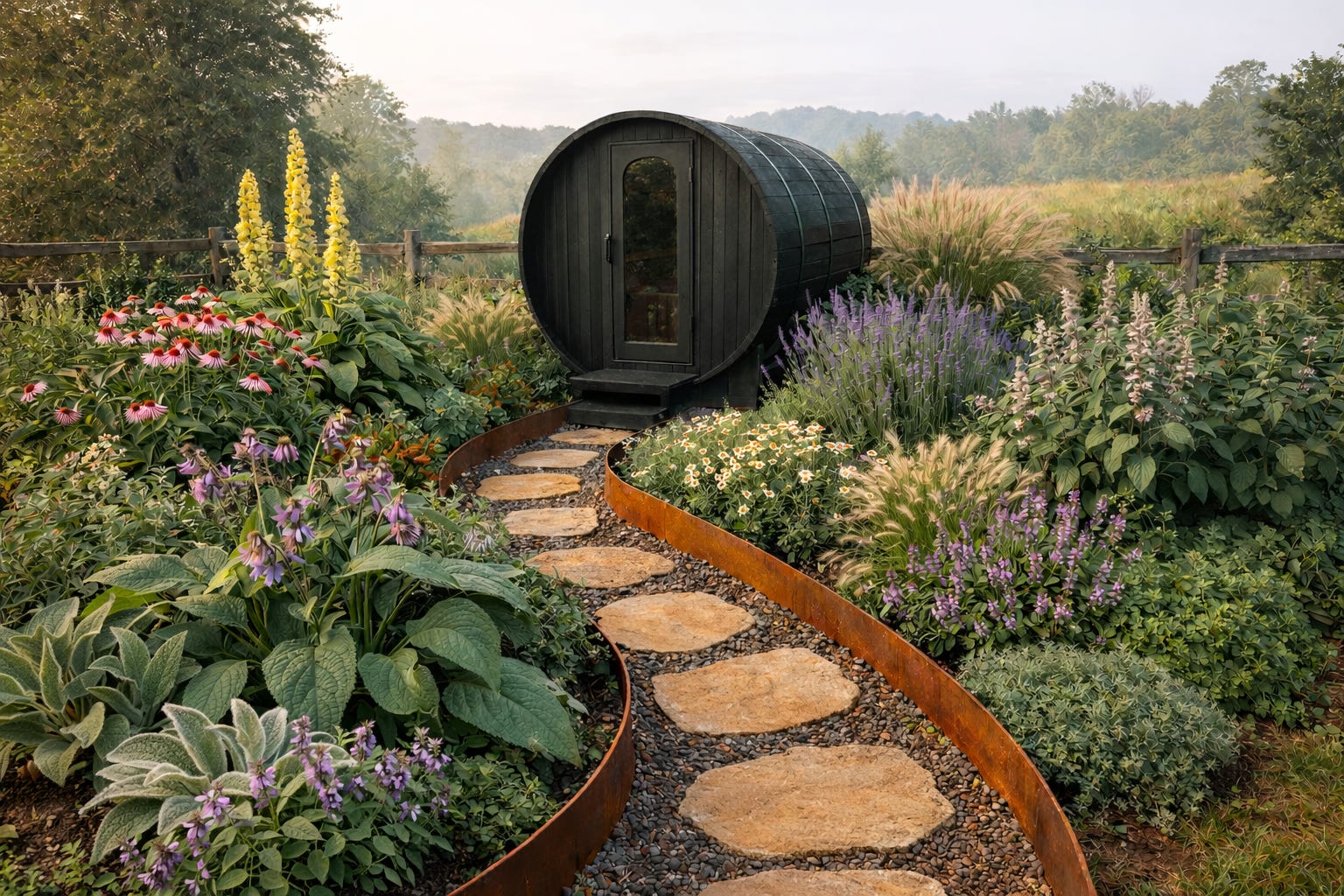
While there is a moment for any of these, and all of these, or perhaps a mix of these, some materials are more favorable in most spaces (polished pea gravel). Before we depart from these common pathways, I do have to address one more element in the equation.
Enter your pathway’s life partner: edging
Thinking about edges
Just so that we can see the full picture, pathways often need edging to help them be both defined and contained. Pea gravel moves around a lot, so we really need an edge for it to be contained within. You can do that with larger stones, with steel, and even with wood, but it needs to be thought through so that your path stays a path. Mulch benefits beautifully from edging, as do most materials. It’s like adding a touch of eyeliner to your makeup look - defines the main event, without taking over control (when done right).
There are endless edging options, but our favorites are Corten steel and stone, since most of our clients opt for polished pea gravel, grass, or mulch.
Corten is a special kind of steel that ages with a rusty patina, but lasts longer than classic steel. And stones can be arranged in many ways. You can use rip rap for a cobble look, edging pavers, or even bricks on their edges.
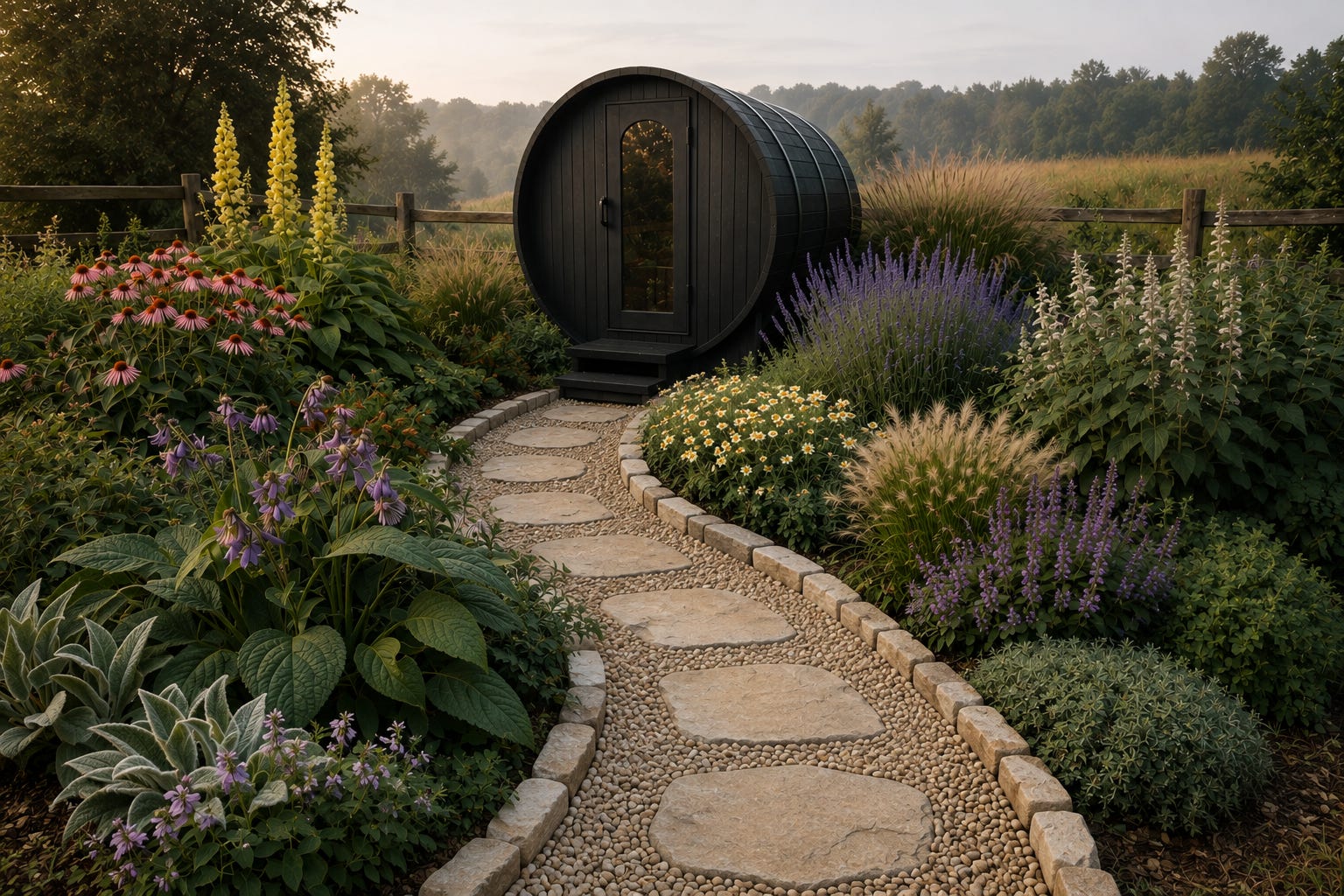
The part of the pathway selection that is most important and that you should return to and mull over is the questions we ask. Function should lead form, and in that you can start to at least eliminate options. Great gardens are built on thousands of tiny decisions, and often the ones that feel boring are quite fundamental to the essence of the space.
Best of luck on whichever path you choose, my friends.
I have 12 inch tall raised beds so I threw some pavers down and am letting the grass grow around them. I use a battery powered weed eater to keep the grass at bay. It’s worked well so far! I have pavers for when it’s been raining (which is a lot this summer along the gulf), but the grass is cooler if I’m barefoot and the pavers are too hot. It’s not my dream garden but it’s the current iteration and working well enough!
Gravel is hot. I'm considering letting the grass that tries to restablish itself in my paths have it's way. I could have the cool greenness of grass without the mud. I'd have to mow once in a while, but I'd let it go dormant in summer. It's not like weeds aren't a constant battle in gravel paths anyway. Rounded pea gravel rolls too much--it's hard to push a wheelbarrow through it. I prefer crushed rock. It packs tighter.