
The Ultimate Cabbage Grow Guide
Which varieties to grow (why you can't NOT grow her) & how to do it well

It’s the year of the cabbage (I declared this in a piece HERE), and so I wanted to give you a grow guide to accompany my bold decree, as well as encourage you to not overlook this humble staple. This guide is for choosing which cabbage to grow in the first place, and then how to have success with your endeavor. Seeing as I’m me, and you know I love an aesthetic and productive garden, there will be considerations for many angles of cabbage-growing. No basic cabbages shall be included, that I can assure you.
Also, a note of importance: many of our ancestors grew cabbage, making it something of an ancestral food moment for us - good for the gut, my babes. I find that some of the more blah vegetables are simply misunderstood since they’ve been minimized to their representation at the grocery store. Honestly, you probably havent even seen many of these varieties, so our education begins in the expansion of the crop.
Now, I think of cabbage in many ways: structure and texture in the garden, a crop that stores well, a cool-season crop, and something versatile that you can grow and also benefit from beyond just basic nutrients (hello, she ferments beautifully!).
Plants that add structure are guiding lights in your garden - they’re subconsciously drawing your eye around. Cabbage does this beautifully, even in her many forms. I highly recommend you plant her just for this reason alone.
So let’s get into the details of choosing your cabbage.
1. Classic Kitchen Cabbages (reliable & versatile)


These are the cabbages that replace grocery store cabbage in concept - they’re the most reliable and feel like a market product.
Farao or Stonehead (they look and behave similarly)
• early season
• compact heads
• crisp texture
• extremely reliable
• tight dense heads
January King
• cold-tolerant
• beautiful blue-purple winter leaves
• excellent for winter gardens
2. For Beauty in the Garden


These cabbage varieties give structure and visual interest with their colors, textures, and shapes.
Red Acre
• deep jewel-tone purple and teal
• small tidy heads
• perfect for raised beds & pops of mood
Kalibos
• dramatic pointed heads
• magenta color
• incredibly sweet
Deadon
• Savoy-type with purple outer leaves
• extremely ornamental - they’re giving French potager vibes
• winter hardy
3. For Fermentation (sauerkraut & kimchi)


These varieties have the perfect density and sugar balance that you want for fermenting. Saurkraut is much simpler to make than you think - I highly recommend you try it.
Caraflex
• small cone-shaped heads that mature early in about 68 days
• tender leaves
• excellent for kraut and honestly just cute
Brunswick
• huge heirloom cabbage that can get up to 5 lbs!
• very traditional kraut cabbage
Tendersweet
• oval-shaped
• mild flavor
• ferments beautifully
4. For Winter Storage


If you want cabbage through late fall and winter, these store really well and help close that food gap come January.
Storage No. 4
• extremely dense heads, making for excellent cellar storage
Danish Ballhead
• classic storage cabbage that’s very hardy
5. For Flavor (the chefs’ cabbages)


These are not grocery store tasting cabbages - I dare you to try one of these and report back! My parents went to Germany this past year and said their favorite dish was savoy cabbage sauteed with cream - simple and stunning.
Savoy Perfection
• crinkled leaves, buttery texture, and incredible sautéed
Melissa Savoy
• very tender leaves, sweet flavor, and beautiful structure
Okay, now that we have an idea of which cabbages we want to eat, let’s talk about actual growing.
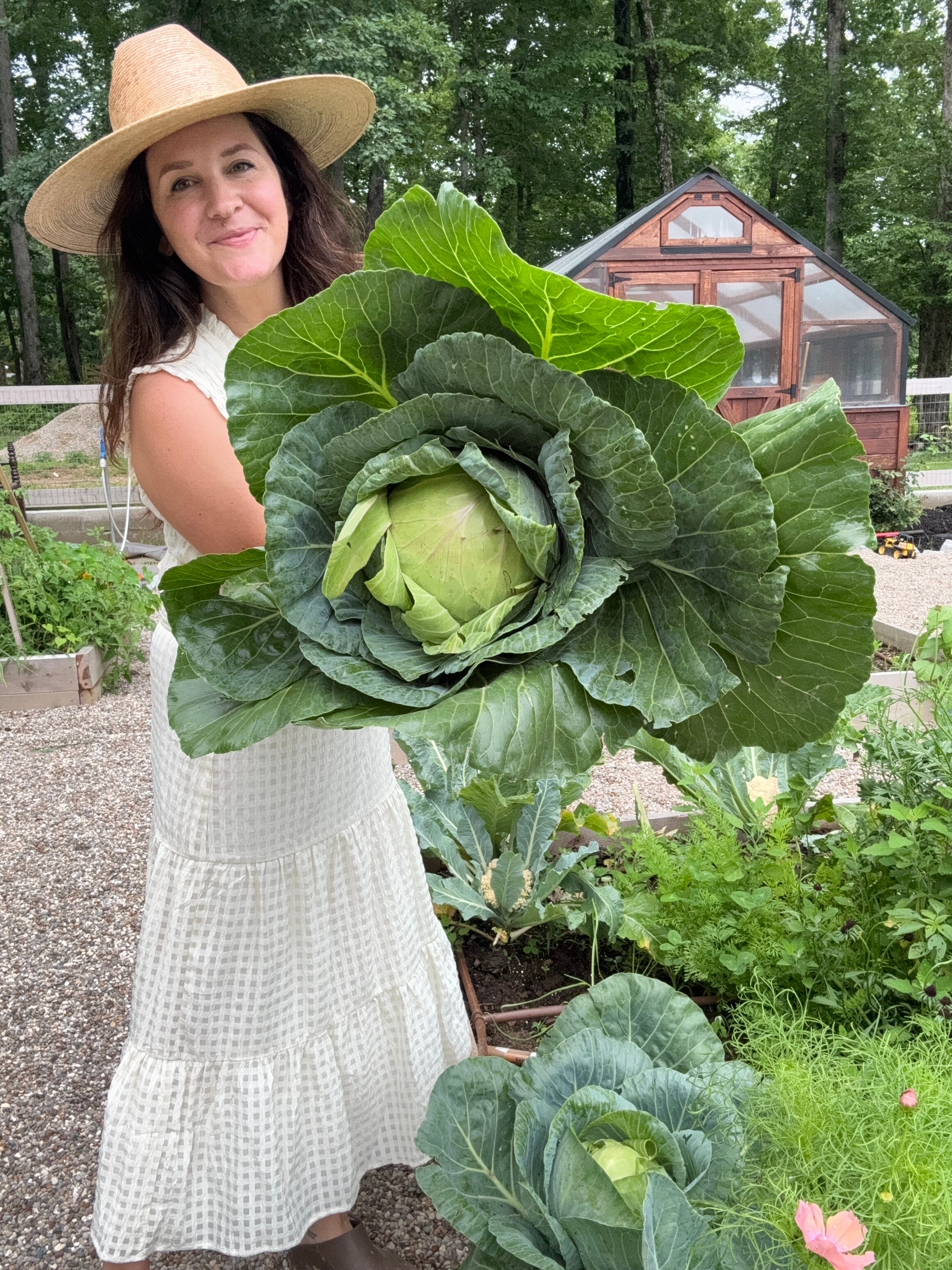
I’ve found the hard part in this endeavor is to get timing right, so that the cabbage head develops well for varieties that give you that perfect sphere - you want that tight head, firm and dense. Let’s get into it:
Sun
Cabbage prefers full sun, especially during its early growth stages. Aim for 6–8 hours of direct sunlight a day. In warmer climates, cabbage actually appreciates cooler seasonal light, so plant it with some shade or behind something that will cast it. It grows best in spring and fall gardens, when temperatures are moderate and the sun is less intense. The key is a steady light without excessive heat.
Water
Cabbage thrives with consistent, even moisture. Think deep watering 2–3 times per week, depending on rainfall and soil type. Avoid letting the soil dry out completely between waterings. Inconsistent moisture can cause small heads, splitting, or tough leaves. A thick layer of mulch (straw, compost, or shredded leaves) helps retain moisture and regulate soil temperature. Cabbage loves cool, moist soil.
Soil
Cabbage is a heavy feeder, so soil quality matters. The ideal soil is rich in organic matter, well-draining, and slightly firm. Consider adding fresh compost to beds with worm castings or even actual worms (if you’re missing life under the soil, you need these).
Timing
Cabbage is a cool-season crop. Plant it when temperatures are between 45–75°F.
For most gardens, this means starting seeds indoors 6–8 weeks before your last frost, then transplanting outdoors 2–3 weeks before the last frost.
In Fall, direct sow or transplant 10–12 weeks before your first fall frost. Fall cabbage is often sweeter and more reliable because cooler temperatures improve flavor.
Companions
Cabbage grows well alongside plants that help deter pests. Great companions include onions and garlic (pest deterrance), dill, chamomile, beets, lettuce, and spinach. Herbs and alliums are especially helpful in cabbage beds.
Avoid planting cabbage near other brassicas/ in large monocultures, as this attracts pests.
Pests
The most common pest pressure is from cabbage worms, loopers, and aphids. They’ll tuck into the leaves and hide - you’ll often see the evidence of pests after harvest, and they are most active in warm weather. To combat these, you can try floating row covers (with nets or shade cloth), and encouraging beneficial insects like ladybugs, parasitic wasps, lacewigs, and hoverflies will help you. Note: research what these look like so as not to confuse them with naughty bugs.
To get rid of any pests, I find that removing them by hand is often the simplest solution. I occasionally bribe my children with nickels to do this.
Tips
Finally, a few tricks up my sleeve that can help you keep the cabbages cabbaging:
• Mulch deeply to maintain even moisture and cooler soil
• Firm the soil around the base of each plant when planting
• Harvest when heads are dense and firm - don’t wait on this
There you have it! If you have any questions, let me know!
I'm so happy you are on Substack! I've followed your kitchen garden instagram for years when you lived in Southern California. I was living in San Diego and I learned so much from you. I moved back to my home in Hawai'i about 3 years ago and now I'm in zone 11. I love watching you grow your homestead in Tennessee now and having the space to grow even more varieties of vegetables and flowers. I tried growing cabbage one year here and I failed. I'm going to try again this year so I can make sauerkraut and kimchi.
I did not realize there are so many varieties of cabbage! 🥬